
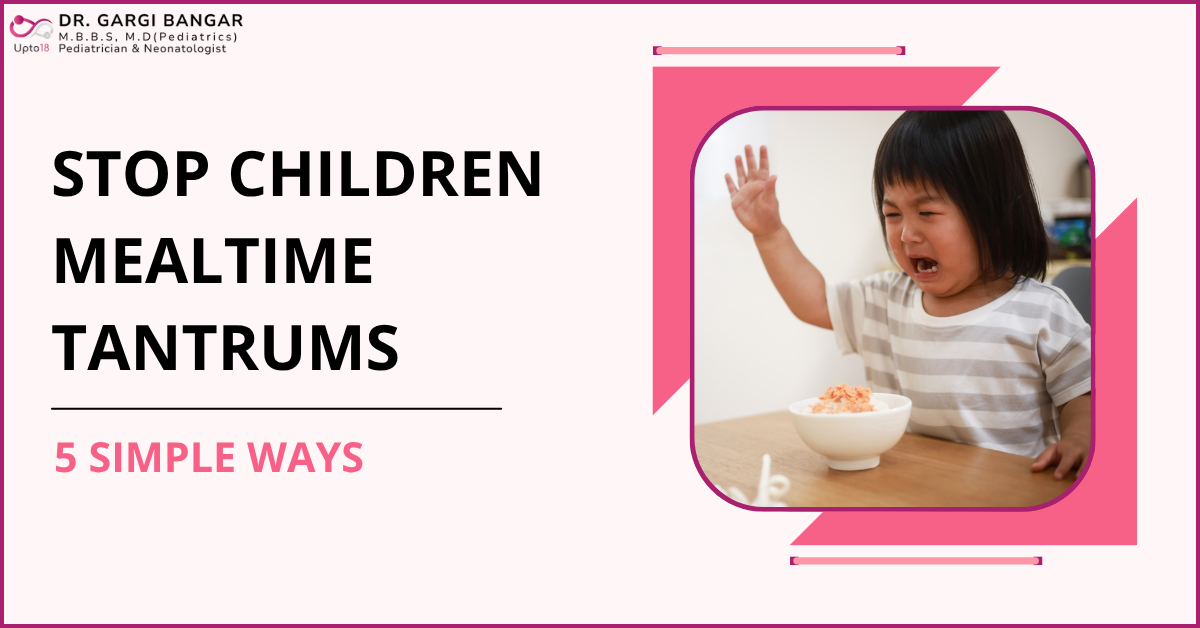
Mealtime tantrums can turn a simple family moment into stress. Your child may refuse food, cry, or push the plate away. You may feel confused about what went wrong.
If you are looking for help related to a child nutritionist in Vashi, or guidance for pediatric diet and nutrition in Navi Mumbai, you are not alone. Many parents search for when mealtime challenges become frequent.
These concerns are often linked to routine, food habits, and emotional responses around eating.
In this blog, you will learn simple ways to manage mealtime tantrums, improve eating behavior, and make meals calmer. You will also understand how professional support from a pediatric dietitian in Navi Mumbai or pediatric dietitian in Vashi can help improve your child's eating patterns.
Children feel secure when meals happen at fixed times. Irregular timing often leads to low hunger and refusal to eat.
Many parents notice that frequent snacking is a major reason behind poor appetite.
Fix breakfast, lunch, dinner, and snack timings. Keep proper gaps between meals so your child naturally feels hungry at mealtime. This simple structure reduces tantrums and improves food acceptance.
Mealtime is not only about food. It is also about connection.
Instead of only giving instructions, involve your child in conversation. Ask questions like:
What made you happy today?
Do you want rice or roti today?
Which vegetable looks interesting to you?
This approach is often suggested by a pediatrician for child diet in Navi Mumbai because it improves emotional comfort during meals.
When you speak with your child instead of speaking at them, they feel valued and more open to eating.
Pressure during meals is one of the biggest triggers for tantrums.
Many parents unknowingly force children to finish food, which increases resistance.
Let your child decide how much to eat. Offer food calmly and avoid repeated instructions.
If you are consulting a pediatrician for child diet in Vashi, one of the first recommendations is to reduce feeding pressure and allow natural hunger cues to develop.

You do not need screens or toys to make meals enjoyable. Small emotional changes work better.
Try simple ideas:
Eat together as a family
Share small daily stories
Let your child help serve food
Use simple colorful plates
Families guided by a pediatric dietitian in Navi Mumbai often see better results when mealtimes feel relaxed instead of forced.
When meals feel positive, your child connects food with comfort instead of conflict.
Children feel more in control when they are given limited choices.
Too many choices confuse them and lead to refusal.
Offer simple options like:
Apple or banana
Rice or roti
Carrot or cucumber
This method is commonly used in consultations to reduce mealtime resistance and improve cooperation.
If mealtime issues continue, professional guidance can help identify the real cause. It may be related to feeding behavior, selective eating, or nutritional imbalance.
Parents often consult Pediatrician & Child Specialist Dr. Gargi Bangar in Vashi, Navi Mumbai for child feeding concerns. She provides structured guidance in pediatric diet and nutrition, helping parents manage mealtime behavior and improve eating habits.
Early support from a pediatric nutrition specialist Navi Mumbai can help prevent long-term feeding difficulties and improve overall nutrition.
It may be due to irregular routine, excess snacking, or strong food preferences.
No. Forcing increases resistance. Calm and consistent feeding works better.
If your child consistently refuses meals or shows poor growth, consult a specialist early.
Yes. It is common and usually improves with routine and repeated exposure to foods.
They guide you on meal planning, feeding behavior, and balanced nutrition for your child.